Complex PTSD: When Trauma Affects Emotion, Identity, and Relationships
Complex PTSD can affect far more than a person’s memories of what happened. For many people, trauma is not experienced as something that sits neatly in the past. It can shape how a person feels, how they understand themselves, how they relate to others, and how safe they feel in the world.
At Wise-Mind DBT Brisbane, we often work with people who describe feeling emotionally overwhelmed, disconnected from themselves, mistrustful in relationships, or caught in patterns they do not fully understand. Many have spent years believing they are “too sensitive”, “too difficult”, “too needy”, or “not coping well enough”. In reality, these responses often make sense when understood through the lens of trauma.
Complex PTSD, or C-PTSD, is not simply about having been through a traumatic event. It is often associated with repeated, prolonged, or relational trauma, particularly where escape was difficult or support was limited. This may include childhood abuse or neglect, family violence, coercive control, sexual trauma, bullying, institutional trauma, or other experiences where a person’s sense of safety, autonomy, and worth has been deeply affected.
What Is Complex PTSD?
Complex PTSD includes the core features of post-traumatic stress, such as re-experiencing, avoidance, hypervigilance, and a persistent sense of threat. However, it also includes broader difficulties with emotional regulation, self-concept, and relationships.
This means a person may not only experience flashbacks, nightmares, or trauma reminders. They may also struggle with intense shame, emotional instability, chronic self-criticism, difficulty trusting others, fear of abandonment, people-pleasing, anger, numbness, dissociation, or feeling fundamentally different from other people.
These difficulties are not signs of weakness. They are often adaptations that developed in response to unsafe or unpredictable environments. What once helped a person survive may later become exhausting, confusing, or painful.
How Trauma Affects Emotion
One of the most common impacts of Complex PTSD is difficulty regulating emotions. This does not mean a person is choosing to be reactive or dramatic. It means the nervous system has learned to detect danger quickly, sometimes even when the present moment is relatively safe.
For some people, emotions escalate rapidly. A small conflict may feel unbearable. A delayed text message may trigger panic. A change in tone may feel like rejection. Feedback may feel like humiliation. A disagreement may feel like abandonment.
For others, trauma leads to emotional shutdown. Instead of feeling too much, they may feel disconnected, numb, foggy, or detached from their body. This can be confusing, particularly when the person knows intellectually that something matters, but cannot feel connected to it emotionally.
Both patterns make sense. Hyperarousal and shutdown are different ways the body attempts to manage threat. One moves towards urgency, action, and protection. The other moves towards disconnection, collapse, or conservation of energy.
DBT can be particularly useful here because it does not shame emotional intensity. Instead, DBT helps people understand emotions, name them more accurately, reduce vulnerability to emotional overwhelm, and develop practical skills for responding to emotions without making the situation worse.
How Trauma Affects Identity
Complex trauma can deeply affect a person’s relationship with themselves. When someone has been repeatedly harmed, invalidated, controlled, neglected, or blamed, they may internalise painful beliefs about who they are.
These beliefs might sound like:
“I am too much.”
“I am not worth protecting.”
“My needs are a burden.”
“I ruin relationships.”
“I cannot trust myself.”
“Something is wrong with me.”
Over time, these beliefs can become part of a person’s identity, even when they are not true. This is one of the most painful aspects of Complex PTSD. The person may not simply remember what happened. They may come to see themselves through the eyes of the people or systems that harmed them.
This can lead to chronic shame, self-doubt, perfectionism, people-pleasing, difficulty making decisions, or feeling unsure of personal values and preferences. Some people describe not knowing who they are outside of survival mode. Others may feel as though they have built their entire life around avoiding conflict, preventing rejection, or keeping other people comfortable.
DBT supports identity development by helping people notice the difference between emotions, thoughts, urges, and facts. It also encourages people to build a life based on values, not only fear. Skills such as mindfulness, self-validation, opposite action, and interpersonal effectiveness can help a person begin to relate to themselves with more steadiness and respect.
How Trauma Affects Relationships
Because Complex PTSD often develops in relational contexts, it can have a profound impact on relationships. When harm has occurred through attachment figures, partners, family members, peers, or authority figures, connection itself can become complicated.
A person may deeply want closeness while also feeling frightened by it. They may long for reassurance, but feel ashamed of needing it. They may become highly alert to signs of rejection or withdrawal. They may avoid vulnerability, test relationships, withdraw suddenly, or stay in relationships where their needs are not respected.
Some people become highly conflict avoidant. They may agree when they want to say no, apologise when they have done nothing wrong, or minimise their needs to keep the peace. Others may become more reactive in relationships, particularly when they feel dismissed, ignored, criticised, or abandoned.
Again, these patterns are not character flaws. They are often protective strategies. If someone has learned that relationships can be unsafe, unpredictable, or conditional, it makes sense that their nervous system would respond strongly to relational cues.
DBT interpersonal effectiveness skills can be very helpful for this. Skills such as DEAR MAN, GIVE, and FAST teach people how to ask for what they need, maintain relationships where appropriate, and preserve self-respect. For trauma survivors, this can be especially important because healthy relationships require more than closeness. They also require boundaries, consent, repair, and mutual respect.
Why Safety Comes Before Deep Trauma Work
Many people with Complex PTSD feel pressure to “get to the root cause” quickly. While trauma processing can be important, it is not always the first step. For many people, the first stage of trauma recovery involves stabilisation.
Stabilisation means building enough emotional, relational, and practical safety that trauma work can occur without overwhelming the person. This may include learning grounding skills, reducing self-harm or crisis behaviours, improving sleep and routines, developing support systems, strengthening boundaries, and building the capacity to return to the present after becoming triggered.
DBT fits well within this stage of trauma recovery because it focuses on skills that can be used in daily life. Before exploring traumatic memories in depth, many people need ways to survive distress, regulate emotions, communicate safely, and reduce behaviours that may create further suffering.
This does not mean avoiding trauma. It means approaching trauma carefully, with enough support and structure.
How DBT Can Help with Complex PTSD
DBT was originally developed for people experiencing intense emotions, relationship difficulties, impulsive behaviours, and high levels of distress. These are also common experiences for many people with Complex PTSD.
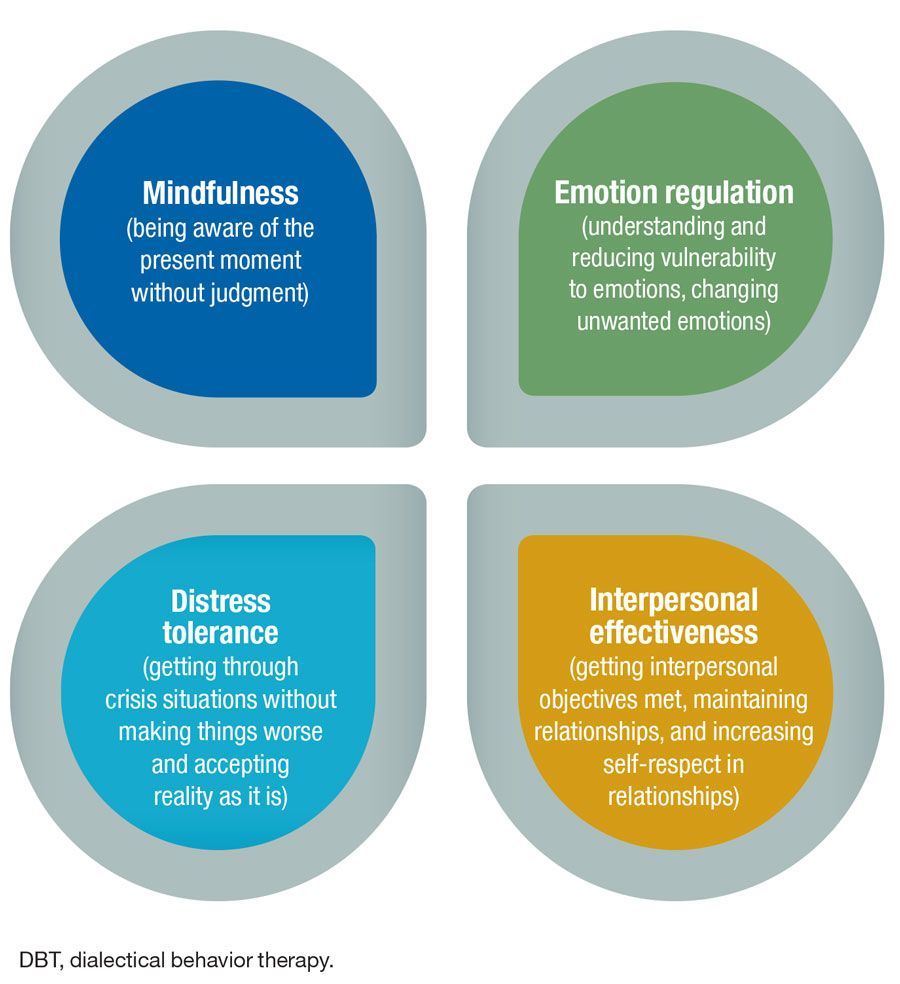
DBT can help by teaching skills across four key areas.
Mindfulness helps people notice what is happening in the present moment, rather than becoming completely pulled into trauma memories, emotional flashbacks, or threat-based interpretations.
Distress tolerance helps people get through intense emotional states without making the situation worse. This is especially important when trauma responses create urges to withdraw, lash out, self-harm, use substances, or return to unsafe relationships.
Emotion regulation helps people understand emotions, reduce vulnerability to emotional overwhelm, and respond to feelings more effectively.
Interpersonal effectiveness helps people communicate needs, set boundaries, maintain self-respect, and navigate relationships with more clarity.
For people with Complex PTSD, these skills are not quick fixes. They are practices that can gradually support greater stability, choice, and self-trust.
Complex PTSD Is Not a Personal Failure
One of the most important messages for people with Complex PTSD is this: your responses make sense in context.
If you are easily startled, there may be a reason your nervous system learned to stay alert.
If you struggle to trust, there may be a reason trust has felt unsafe.
If you feel shame, there may be a reason you learned to blame yourself.
If relationships feel overwhelming, there may be a reason closeness has become linked with danger.
Healing does not mean pretending the trauma did not happen. It also does not mean blaming yourself for the ways you adapted. Healing often begins with understanding that your responses were attempts to survive, even if they are no longer serving you in the same way.
Moving Towards Stability and Self-Trust
Recovery from Complex PTSD is possible, but it usually requires patience, support, and a structured approach. DBT can offer practical tools for the parts of trauma recovery that occur in everyday life: managing distress, reducing emotional overwhelm, communicating more clearly, setting boundaries, and building a life that feels more stable and meaningful.
For many people, the goal is not to become unaffected by the past. The goal is to have more choice in the present.
That might mean pausing before reacting.
It might mean recognising a trigger without believing every thought that comes with it.
It might mean saying no without collapsing into guilt.
It might mean asking for reassurance without shame.
It might mean learning that emotions can be intense without being dangerous.
Complex PTSD can affect emotion, identity, and relationships, but these areas can also become places of healing. With the right support, people can learn to understand their nervous system, relate to themselves more compassionately, and build safer, more respectful connections with others.
Support for Complex PTSD in Brisbane
Wise-Mind DBT Brisbane provides therapy and DBT-informed support for people experiencing emotional dysregulation, trauma-related difficulties, relationship distress, BPD, and Complex PTSD.
If this blog resonates with your experience, support is available. You do not need to manage these patterns alone.
Contact Wise-Mind DBT Brisbane for information, assessment, and support.
Wise-Mind Matters