Can a 12-Week DBT Skills Group Really Help You Regulate Emotions? The Research Says Yes.
Jean-Gabrielle Short • July 27, 2025
If you’ve been wondering whether a short-term Dialectical Behaviour Therapy (DBT) skills group can make a meaningful difference, the research is in—and the answer is a resounding yes.
At Wise-Mind DBT Brisbane, we’re often asked: “Do I really need a full year of DBT to feel better?”
While standard DBT programs traditionally span 12 months, new evidence shows that shorter, skills-based DBT groups—such as our 12-week format—are highly effective
for improving emotional regulation, reducing psychological distress, and enhancing wellbeing.
Sign Up Today
What the Evidence Shows
A recent systematic review by Hernandez-Bustamante et al. (2024) examined 18 randomised controlled trials and confirmed that DBT, whether delivered in full or abbreviated formats, leads to consistent improvements in emotional regulation, impulsivity, and symptoms of depression. Notably, even short-term DBT programs significantly reduced self-harming behaviours and suicidal ideation, with benefits often persisting for up to two years after treatment. The authors emphasised that DBT skills training, as delivered in group formats—was particularly effective in reducing shame-based behaviours such as self-harm.
Similarly, Kujovic et al. (2024) compared 8-week and 12-week inpatient DBT programs and found no significant difference in treatment outcomes between the two durations. Both groups showed substantial reductions in borderline symptom severity and depressive symptoms, with large effect sizes across both domains. This reinforces the idea that a well-structured 12-week DBT group is not only effective—it is efficient.
Why Emotion Regulation Matters (and How DBT Helps)
Emotion regulation is more than simply "controlling your feelings." It refers to the ability to understand, label, and modulate emotional experiences in a way that supports—rather than disrupts—daily functioning and wellbeing. For individuals with high emotional sensitivity—particularly those diagnosed with Borderline Personality Disorder or Complex PTSD emotions can feel overwhelming, unpredictable, and deeply shame-laden.
When emotions become too intense or prolonged, many people turn to impulsive or avoidant behaviours such as self-harm, substance use, or conflictual relationship patterns. The Emotion Regulation
module in DBT is specifically designed to address this. In group sessions, participants learn to:
- Recognise and track emotional patterns
- Reduce emotional vulnerability by caring for physical and psychological wellbeing
- Apply strategies to shift the intensity of unwanted emotions
- Increase experiences of positive emotions
- Replace ineffective coping with more skilful responses
Both Hernandez-Bustamante et al. (2024) and Kujovic et al. (2024) highlight that
improvements in emotion regulation are a key mechanism of change in DBT. These skills not only reduce risk but also empower clients to respond more flexibly and thoughtfully in the face of stress.
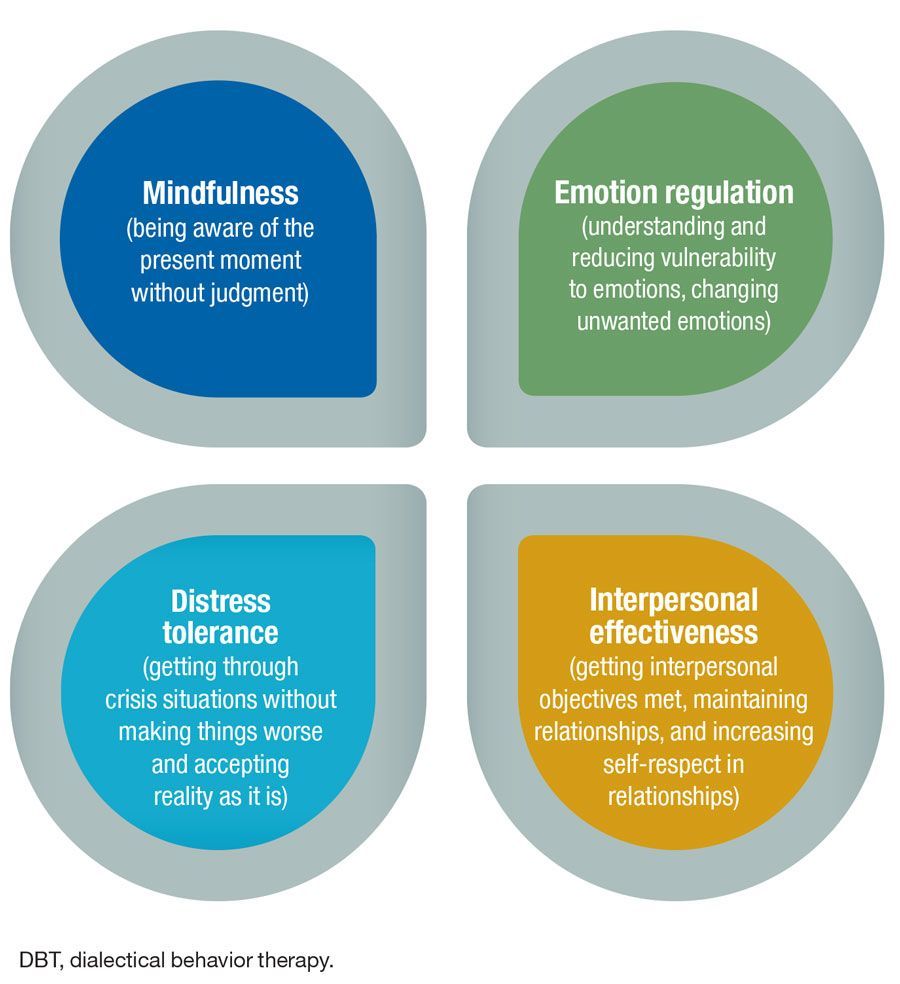
The Four Pillars of DBT Skills Training
At Wise-Mind DBT Brisbane, our 12-week group follows the core DBT curriculum, which is structured around four evidence-based modules. These work together to help individuals build a more resilient, values-driven life:
1. Mindfulness
Mindfulness is the foundation of DBT. It teaches participants how to observe and describe thoughts, feelings, and physical sensations in the present moment—without judgment. This skill increases awareness and decreases reactivity, allowing for more thoughtful and compassionate responses to distressing experiences.
2. Distress Tolerance
Life is full of painful moments that cannot be immediately changed. Distress Tolerance skills help individuals manage crises without making the situation worse. This module teaches short-term strategies such as distraction, self-soothing, and radical acceptance, which are especially helpful in early recovery or during acute stress.
3. Emotion Regulation
Building on mindfulness, the Emotion Regulation module teaches participants how to understand and influence their emotional experience. By learning how to reduce vulnerability to emotion mind and increase positive experiences, individuals are better equipped to navigate emotional ups and downs with stability and confidence.
4. Interpersonal Effectiveness
Many individuals who enter DBT report difficulties in relationships—whether it’s asking for what they need, setting boundaries, or managing conflict. This module teaches practical skills to improve communication, strengthen connections, and maintain self-respect. These tools reduce interpersonal chaos and foster more balanced, respectful relationships.
Ready to Join Our Next Group?
Our next 12-week DBT Skills Group begins Saturday, 23 August. Whether you are looking to build emotional resilience, reduce distress, or develop healthier relationship patterns, this program offers a structured, skills-based pathway grounded in research and delivered with compassion.
References
Hernandez-Bustamante, M., Cjuno, J., Hernández, R. M., & Ponce-Meza, J. C. (2024). Efficacy of Dialectical Behavior Therapy in the Treatment of Borderline Personality Disorder: A Systematic Review of Randomized Controlled Trials. Iranian Journal of Psychiatry, 19(1), 119–129. https://doi.org/10.18502/ijps.v19i1.14347
Kujovic, M., Benz, D., Riesbeck, M., Mollamehmetoglu, D., Becker-Sadzio, J., Margittai, Z., Bahr, C., & Meisenzahl, E. (2024). Comparison of 8-vs-12 weeks, adapted dialectical behavioral therapy (DBT) for borderline personality disorder in routine psychiatric inpatient treatment—A naturalistic study. Scientific Reports, 14, Article 11264. https://doi.org/10.1038/s41598-024-61795-9
Spots are limited. Click below to register your interest and take the first step towards emotional balance and meaningful change.
Wise-Mind Matters

Learn how Complex PTSD affects emotions, identity and relationships, and how DBT skills can support safety, stability, healthy boundaries and lasting self-trust.

Learn how autistic masking affects identity, emotional regulation and burnout, and how neurodiversity-affirming DBT can support safer, sustainable unmasking.

Learn why autistic burnout is not avoidance, how rest supports nervous system recovery, and how autism-affirming DBT can help rebuild sustainable capacity.

Learn how ADHD-related impulsivity affects emotions, relationships and daily life, and how practical DBT skills can create more pause, choice and self-control.

xplore anger through a DBT lens, including emotional vulnerability, nervous system activation and practical skills to reduce escalation and respond effectively.

Learn why meaningful change does not follow the calendar, and how DBT supports steady emotional, behavioural and identity growth through practice over time.

Learn why change feels difficult and how DBT uses acceptance, willingness and practical skills to reduce resistance, build confidence and help you move forward.

Learn how DBT chain analysis uncovers the links behind problem behaviours, reduces shame, builds accountability and creates practical pathways to lasting change.

Learn how emotional vulnerability and self-invalidation intensify distress, and how DBT skills build self-validation, balance and more compassionate coping.
Discover what to expect from Wise-Mind DBT Brisbane’s 13-week skills group, covering mindfulness, emotion regulation, distress tolerance and relationships.