
Borderline Personality Disorder and Catastrophising: Predicting Disaster
Jean-Gabrielle Short • July 15, 2025
Catastrophising is one of the most emotionally intense and distressing cognitive distortions that can affect individuals living with Borderline Personality Disorder. If you’ve ever found yourself spiralling from a minor mistake into thoughts of total rejection or doom, you’re not alone—and there is a path forward.
What is Catastrophising?
Catastrophising is a type of cognitive distortion where the mind leaps to the worst possible outcome—regardless of how unlikely it might be. It can involve:
- Assuming a situation is far worse than it really is,
- Predicting total failure or devastation based on a small setback,
- Reacting as though disaster is certain, even in the absence of evidence.
For example:
“I made a mistake at work. My boss is going to fire me. I’ll never get another job. I’ll end up alone and homeless.”
In this thinking pattern, the emotional response is not to the situation itself, but to the imagined catastrophe. The brain responds to perceived threat—whether real or imagined—as if it’s actually happening. This can trigger a cascade of anxiety, shame, panic, and impulsive urges to fix or escape the situation.
Why is Catastrophising So Common in BPD?
People with BPD often experience intense sensitivity to perceived abandonment and rejection. This can lead the brain to treat any social rupture—no matter how small—as a threat to survival. If you grew up in an invalidating or unpredictable environment, it makes sense that your nervous system might now be wired to anticipate the worst.
In this way, catastrophising becomes a (very painful) attempt at emotional self-protection. By preparing for rejection, failure, or abandonment, it can feel like you're trying to shield yourself from hurt. Unfortunately, this strategy tends to backfire, reinforcing emotional distress and leading to behaviours that may push others away—just as feared.
The Impact of Catastrophising
Catastrophising in BPD often leads to:
- Intense emotional dysregulation – fear, anger, shame, despair.
- Impulsive behaviours – self-harm, substance use, over-apologising, or cutting off relationships.
- Difficulties in relationships – as others struggle to respond to disproportionate emotional reactions.
- Self-fulfilling prophecies – where feared outcomes become more likely due to reactive behaviour.
These effects can reinforce a painful cycle of suffering and disconnection, making everyday life feel unpredictable and exhausting.
DBT Skills That Can Help
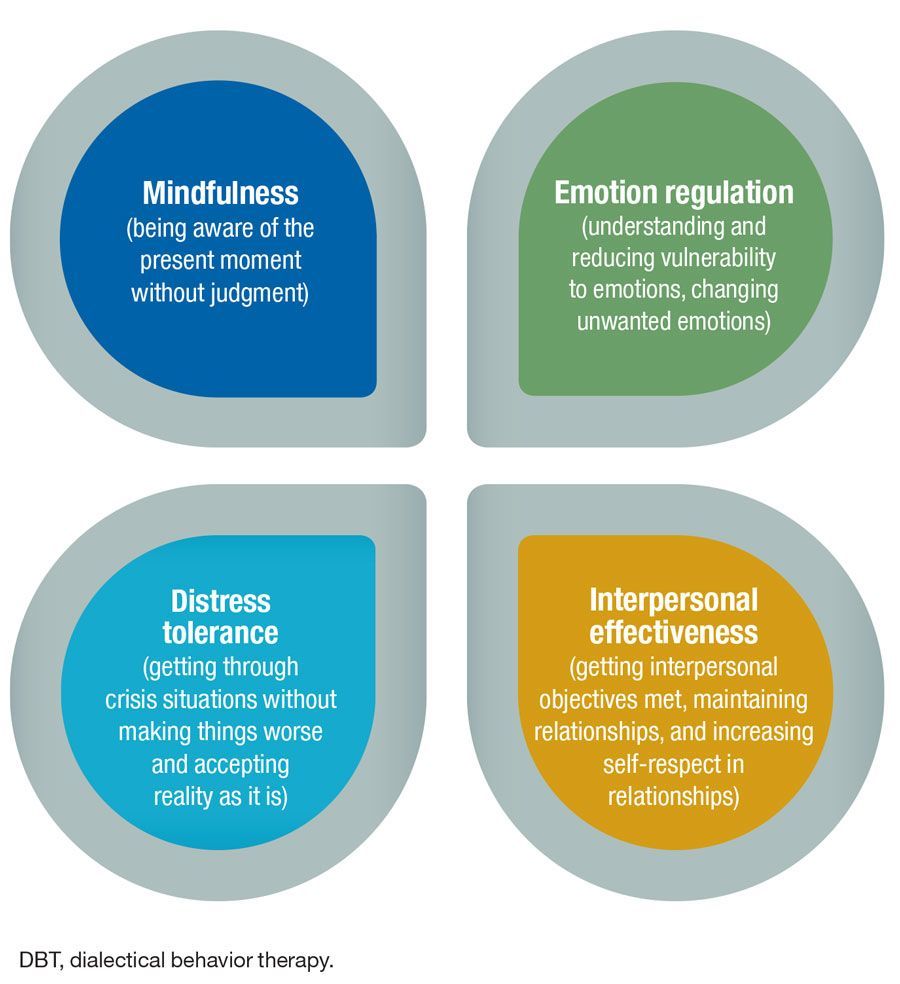
Dialectical Behaviour Therapy offers a range of tools that specifically address catastrophising. Here are some that clients often find helpful:
Check the Facts
This skill invites you to slow down and assess whether your emotional response fits the actual facts of the situation. Ask:
- What is the actual situation?
- What am I telling myself about it?
- Are there other possible explanations?
- What is the most likely, and not the worst, outcome?
By grounding your thoughts in observable facts, you begin to weaken the hold of catastrophic thinking.
Mindfulness of Current Emotion
Instead of trying to escape the overwhelming feelings catastrophising brings, this skill teaches you to *observe*, *name*, and *ride out* the emotion like a wave. This builds tolerance and reduces the need to act impulsively in response to fear or anxiety.
Try saying: “This is fear. Fear is here right now. I can notice it without needing to fix everything.”
When we catastrophise, our minds rush to imagined futures filled with rejection, failure, or disaster. In response, strong emotions like fear, panic, shame, or anger can flood our nervous systems. These emotions feel overwhelming and dangerous—something to *fix*, *escape*, or *avoid*. But in Dialectical Behaviour Therapy, we take a radically different approach: we learn to **stay with the emotion**, *as it is*, without needing to change it immediately.
**Mindfulness of Current Emotion** is a core Emotion Regulation skill that teaches you to fully experience your emotions—without suppressing, judging, or acting impulsively on them. By turning toward the emotion with awareness, you build emotional tolerance and reduce the urgency to act in unhelpful or self-defeating ways.
The Steps of Mindfulness of Current Emotion:
1. Notice the emotion in your body
Where do you feel it? Is it tightness in your chest? A pit in your stomach? Heat in your face? Describe the sensations with curiosity, not judgment.
2. Name the emotion
Give the emotion a label—fear, shame, sadness, anger. Naming an emotion activates the prefrontal cortex and helps regulate the intensity of what you're feeling.
3. Allow the emotion to be there
Don’t push it away or try to “fix” it. Emotions are like waves: they rise, crest, and pass. Trust that this feeling, like all feelings, is temporary.
4. Avoid impulsive action
The urge to *do something*—text, lash out, self-harm, or isolate is often a response to discomfort, not necessity. Pause. Breathe. You can choose not to act on the emotion.
5. Remember: You are not your emotion
Say to yourself, *“This is just an emotion. I can feel it, and I can let it pass.”* This creates space between you and the experience, building the capacity to respond, rather than react.
Why This Skill Matters
In BPD, emotional experiences can feel all consuming, as if they define the self: *“I feel worthless, so I must be worthless.”* By observing emotions mindfully, you begin to decouple your identity from your emotional state. You learn that you can feel intense distress without being destroyed by it, and without needing to make decisions based on that distress.
Practising Mindfulness of Current Emotion helps to interrupt the cycle of catastrophising by:
- Grounding you in the present moment (instead of feared future outcomes),
- Helping you tolerate discomfort without acting impulsively,
- Reducing avoidance of painful emotions, which often prolongs suffering.
This skill doesn’t make emotions disappear—but it does reduce their control over your behaviour and your sense of self.
Like all DBT skills, this takes practice—but over time, it builds emotional resilience, clarity, and a growing sense of self-trust.
Wise-Mind Matters

Learn how Complex PTSD affects emotions, identity and relationships, and how DBT skills can support safety, stability, healthy boundaries and lasting self-trust.

Learn how autistic masking affects identity, emotional regulation and burnout, and how neurodiversity-affirming DBT can support safer, sustainable unmasking.

Learn why autistic burnout is not avoidance, how rest supports nervous system recovery, and how autism-affirming DBT can help rebuild sustainable capacity.

Learn how ADHD-related impulsivity affects emotions, relationships and daily life, and how practical DBT skills can create more pause, choice and self-control.

xplore anger through a DBT lens, including emotional vulnerability, nervous system activation and practical skills to reduce escalation and respond effectively.

Learn why meaningful change does not follow the calendar, and how DBT supports steady emotional, behavioural and identity growth through practice over time.

Learn why change feels difficult and how DBT uses acceptance, willingness and practical skills to reduce resistance, build confidence and help you move forward.

Learn how DBT chain analysis uncovers the links behind problem behaviours, reduces shame, builds accountability and creates practical pathways to lasting change.

Learn how emotional vulnerability and self-invalidation intensify distress, and how DBT skills build self-validation, balance and more compassionate coping.
Discover what to expect from Wise-Mind DBT Brisbane’s 13-week skills group, covering mindfulness, emotion regulation, distress tolerance and relationships.