
Why Meaningful Change Does Not Follow the Calendar
Jean-Gabrielle Short • January 1, 2026
Each year, and often at the start of each week or month, many people feel a renewed pressure to change. New years, birthdays, Mondays, and anniversaries are treated as symbolic turning points. There is an expectation that motivation will suddenly appear and that longstanding emotional or behavioural patterns will loosen simply because the date has changed.
For many people seeking therapy, this expectation becomes a quiet source of shame. When change does not arrive on cue, it can feel like a personal failure rather than a reflection of how human change actually occurs. Emotional regulation, behavioural change, and identity development do not operate according to the calendar. They develop through repetition, practice, and time.
Understanding this can be relieving. It allows space for change to unfold in ways that are realistic, compassionate, and sustainable.
The Myth of the Fresh Start
Symbolic dates are appealing because they offer a sense of order and control. They suggest a clean break from the past and a chance to begin again without baggage. This idea is deeply embedded in cultural narratives about self improvement and success.
Emotionally, however, our nervous systems do not reset at midnight. The same habits, emotional sensitivities, attachment patterns, and stress responses continue into the next day. When we expect sudden change, we often set ourselves up for disappointment. The gap between expectation and reality can reinforce self criticism, hopelessness, or avoidance.
In therapy, many clients describe cycles of recommitment followed by collapse. They may tell themselves that this time will be different, only to feel defeated when familiar struggles return. Over time, this can erode confidence in the possibility of change itself.
How Change Actually Happens
Meaningful change tends to occur gradually and often invisibly at first. It is shaped by small, repeated actions rather than dramatic decisions. Emotional regulation develops when the nervous system has repeated experiences of safety, containment, and choice. Behavioural change strengthens through practice in real situations, including moments where things do not go as planned. Identity development grows when people begin to see themselves responding differently over time.
These processes are cumulative. Each time you pause instead of reacting, name an emotion instead of suppressing it, or return to a skill after forgetting it, you are reinforcing new neural pathways. This work is rarely linear. Progress includes setbacks, plateaus, and periods of frustration. None of these mean that change is not happening.
Time matters because the brain learns through repetition. New patterns require consistent reinforcement before they feel natural or reliable. This cannot be rushed by motivation alone, nor can it be scheduled neatly around symbolic dates.
Emotional Regulation Is Built, Not Decided
Emotional regulation is often misunderstood as a decision to feel differently. In reality, it is a capacity that develops through experience. For many clients, intense emotions have been present for years or decades. These emotional responses were often adaptive at the time they developed. They may have helped someone survive, cope, or remain connected.
Because of this, emotional patterns tend to be deeply ingrained. Regulation emerges when people learn to notice emotions earlier, tolerate discomfort, and respond with skill. This learning happens through repeated exposure to emotions in manageable doses, supported by skills and therapeutic relationships.
Expecting immediate emotional change can inadvertently reinforce the idea that emotions are problems to eliminate. A more helpful approach is to focus on how emotions are met, understood, and responded to over time.
Behavioural Change Requires Practice in Context
Behavioural change is similarly shaped by repetition. Insight alone is rarely enough. Knowing why a behaviour exists does not automatically make it easier to change. New behaviours need to be practised in the same environments where old patterns occur.
This includes moments of stress, fatigue, or emotional vulnerability. It also includes moments where attempts at change do not go well. Each attempt provides information. Over time, this information helps refine responses and build confidence.
When change is framed around calendar milestones, there is often little tolerance for imperfection. When change is framed as a practice, there is more room for learning and adjustment.
Identity Develops Through Lived Experience
Identity is not something that changes through intention alone. It develops through lived experience and accumulated evidence. People begin to see themselves differently after they have responded differently many times.
For example, someone may begin to identify as more resilient after repeatedly surviving difficult moments without collapsing or acting against their values. This shift often happens quietly and retrospectively. Clients frequently report noticing change only when they look back and realise they handled something differently than they would have in the past.
This kind of identity development does not align neatly with symbolic dates. It unfolds as a byproduct of sustained effort and patience.
Skill Highlight: Mindfulness Non Judgementally
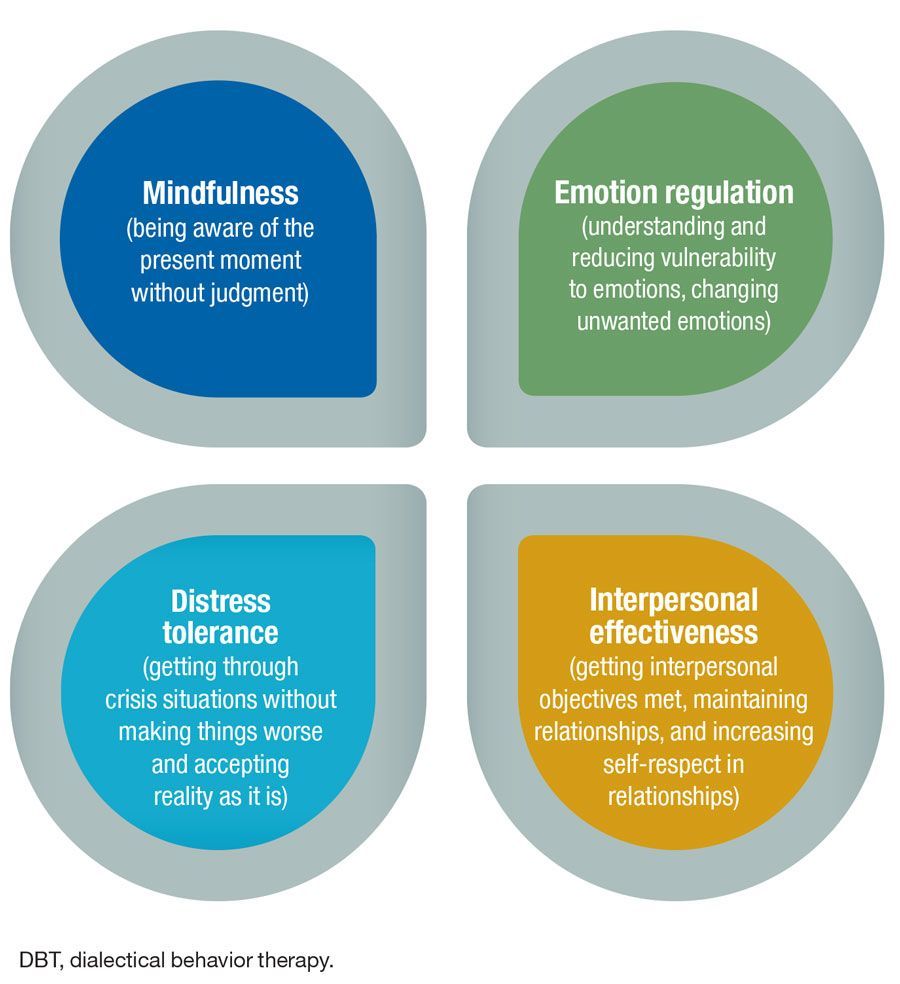
One DBT skill that strongly supports this process is mindfulness non judgementally. This skill involves noticing thoughts, emotions, sensations, and urges without labelling them as good or bad, right or wrong, success or failure.
Judgement often accelerates emotional intensity. When experiences are judged harshly, the nervous system moves quickly into threat responses such as shame, avoidance, or self attack. Non judgement creates space. It allows experiences to be observed rather than fought.
Practising non judgement does not mean approving of harmful behaviours or ignoring the desire for change. It means accurately naming what is present without adding layers of criticism. For example, noticing “I am feeling overwhelmed and wanting to withdraw” rather than “I am weak for feeling this way.”
Over time, this skill supports emotional regulation by reducing secondary emotions such as shame and anger at oneself. It also supports behavioural change by making it easier to return to skills after setbacks. Instead of viewing a lapse as proof of failure, it becomes information about what was difficult in that moment.
A Client Vignette
Consider the experience of a client who came to therapy feeling discouraged after many failed attempts at change. Each January, she committed to being calmer in relationships. By February, she felt ashamed that she was still reacting intensely to perceived rejection.
In therapy, the focus shifted away from dates and resolutions. Instead, attention was given to noticing emotional responses as they arose. Using mindfulness non judgementally, she practised naming her reactions without criticism. When she felt the urge to send multiple messages or withdraw completely, she learned to pause and describe the urge rather than act immediately.
Over several months, there were many moments where she still reacted in ways she disliked. However, there were also moments where she noticed earlier, paused briefly, or repaired more quickly. These moments did not feel significant at the time.
Later, she reflected that she no longer experienced herself as out of control in the same way. This shift did not occur at the start of a year or after a particular milestone. It emerged gradually through repetition, support, and patience.
Letting Go of the Calendar as a Measure of Progress
When change is measured against the calendar, it can obscure real progress. Subtle shifts may be overlooked because they do not fit the narrative of a fresh start. Learning to notice progress in how you respond, recover, and relate to yourself can be more meaningful than any symbolic date.
Therapy is not about becoming a new person overnight. It is about building capacity over time. Each moment of awareness, each return to a skill, and each act of self respect contributes to change, even when it does not feel dramatic.
Meaningful change is rarely sudden. It is steady, uneven, and deeply human. When we release the expectation that change should follow the calendar, we create space for it to unfold in ways that are real and lasting.
Wise-Mind Matters

Learn how Complex PTSD affects emotions, identity and relationships, and how DBT skills can support safety, stability, healthy boundaries and lasting self-trust.

Learn how autistic masking affects identity, emotional regulation and burnout, and how neurodiversity-affirming DBT can support safer, sustainable unmasking.

Learn why autistic burnout is not avoidance, how rest supports nervous system recovery, and how autism-affirming DBT can help rebuild sustainable capacity.

Learn how ADHD-related impulsivity affects emotions, relationships and daily life, and how practical DBT skills can create more pause, choice and self-control.

xplore anger through a DBT lens, including emotional vulnerability, nervous system activation and practical skills to reduce escalation and respond effectively.

Learn why change feels difficult and how DBT uses acceptance, willingness and practical skills to reduce resistance, build confidence and help you move forward.

Learn how DBT chain analysis uncovers the links behind problem behaviours, reduces shame, builds accountability and creates practical pathways to lasting change.

Learn how emotional vulnerability and self-invalidation intensify distress, and how DBT skills build self-validation, balance and more compassionate coping.
Discover what to expect from Wise-Mind DBT Brisbane’s 13-week skills group, covering mindfulness, emotion regulation, distress tolerance and relationships.

Discover how a 12-week DBT skills group can improve emotion regulation, reduce distress and build practical coping skills, supported by strong research evidence.