Complex Posttraumatic Stress Disorder (cPTSD) and Borderline Personality Disorder (BPD): A Psychiatric Times Discussion
Jean-Gabrielle Short • August 7, 2024
Recently the Psychiatric Times wrote an article discussing the overlap between BPD and CPTSD.
Complex posttraumatic stress disorder and borderline personality disorder are two complex conditions which are often discussed together due to their overlapping symptoms and common roots in trauma. Although cPTSD is not included in the DSM-5, it is recognized in the ICD-11 and is distinguished from PTSD by the presence of symptoms such as emotional dysregulation, negative self-concept, and interpersonal difficulties. In contrast, BPD, as defined by the DSM-5, involves a pervasive pattern of instability in interpersonal relationships, self-image, and affects, along with marked impulsivity.
The Overlap and Distinctions Between cPTSD and BPD
The relationship between cPTSD and BPD is complex, with significant symptom overlap that often makes differential diagnosis challenging. Both conditions can arise from early-life trauma, particularly chronic or repeated trauma.
However, the manifestations of these conditions can differ, as the following Venn diagram illustrates:
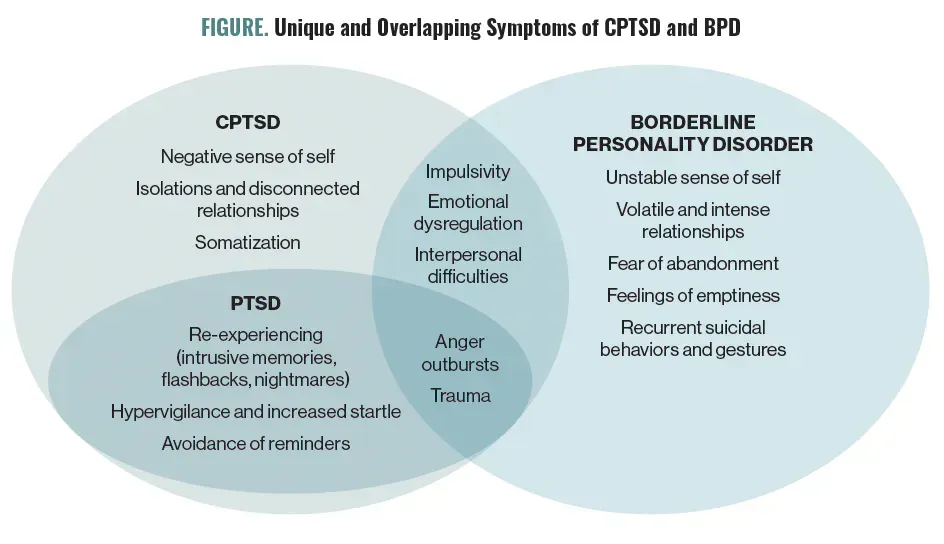
The Venn diagram highlights the unique and overlapping symptoms of cPTSD and BPD:
Unique to cPTSD:
Emotional dysregulation, negative self-concept, and interpersonal difficulties.
Unique to BPD:
Impulsivity, intense fear of abandonment, and chronic feelings of emptiness.
Shared Symptoms:
Emotional instability, difficulty maintaining relationships, and a history of trauma.
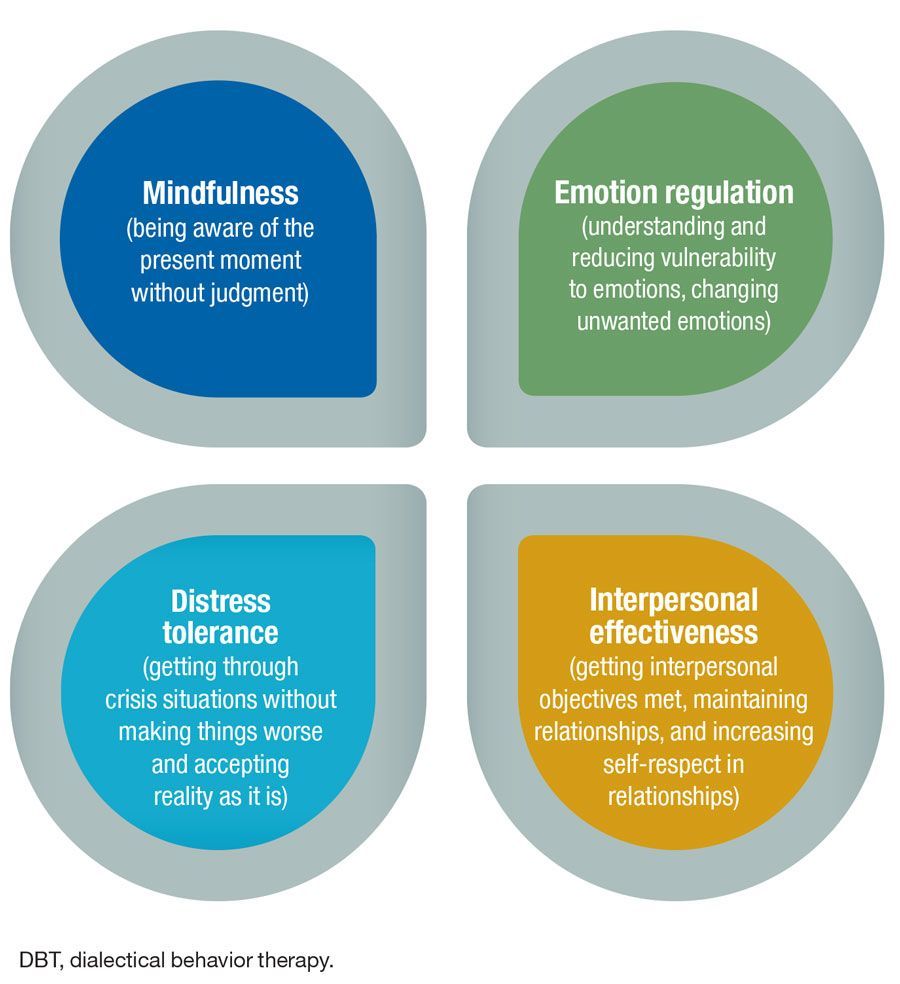
DBT, originally developed by Marsha Linehan for treating BPD, has shown promise in treating cPTSD. DBT focuses on teaching skills in four key areas: mindfulness, distress tolerance, emotion regulation, and interpersonal effectiveness. These skills are particularly beneficial for individuals with cPTSD, who often struggle with emotional dysregulation and interpersonal difficulties.
Key Elements of DBT in Treating cPTSD:
Mindfulness:
Helps individuals stay present and aware of their thoughts and feelings without judgment.
Distress Tolerance:
Provides tools for coping with and surviving crises without making things worse.
Emotion Regulation:
Teaches strategies to manage and change intense emotions that are causing problems.
Interpersonal Effectiveness:
Improves communication skills and the ability to maintain healthy relationships.
Supporting Evidence for DBT in cPTSD Treatment
Several studies have demonstrated the effectiveness of DBT in treating cPTSD. Bohus et al. (2020) conducted a randomized clinical trial comparing DBT-PTSD (a modified version of DBT) with cognitive processing therapy (CPT) in women with complex PTSD from childhood abuse. The study found that DBT-PTSD was significantly more effective in reducing PTSD symptoms and improving emotional regulation than CPT.
Additionally, Courtois (2004) emphasized that therapies focusing on trauma processing, such as cognitive processing therapy, EMDR, and prolonged exposure therapy, are beneficial for patients with cPTSD. These therapies help individuals process and integrate traumatic memories, reducing their impact on current functioning.
The intricate relationship between cPTSD and BPD highlights the need for a nuanced approach to diagnosis and treatment. While there are distinct differences between the two conditions, their overlap, particularly in the context of trauma, necessitates comprehensive treatment plans that address both symptomatology and underlying trauma.
Dialectical behavior therapy, with its focus on emotional regulation and interpersonal effectiveness, offers a robust framework for treating cPTSD. The evidence supporting DBT's efficacy in this context underscores its value as a therapeutic approach, providing hope and improved outcomes for individuals grappling with the complexities of cPTSD and its intersection with BPD.
You can read more from the Psychiatric Times here: https://www.psychiatrictimes.com/view/what-is-complex-posttraumatic-stress-disorder-and-how-does-it-relate-to-borderline-personality-disorder
Wise-Mind Matters

Learn how Complex PTSD affects emotions, identity and relationships, and how DBT skills can support safety, stability, healthy boundaries and lasting self-trust.

Learn how autistic masking affects identity, emotional regulation and burnout, and how neurodiversity-affirming DBT can support safer, sustainable unmasking.

Learn why autistic burnout is not avoidance, how rest supports nervous system recovery, and how autism-affirming DBT can help rebuild sustainable capacity.

Learn how ADHD-related impulsivity affects emotions, relationships and daily life, and how practical DBT skills can create more pause, choice and self-control.

xplore anger through a DBT lens, including emotional vulnerability, nervous system activation and practical skills to reduce escalation and respond effectively.

Learn why meaningful change does not follow the calendar, and how DBT supports steady emotional, behavioural and identity growth through practice over time.

Learn why change feels difficult and how DBT uses acceptance, willingness and practical skills to reduce resistance, build confidence and help you move forward.

Learn how DBT chain analysis uncovers the links behind problem behaviours, reduces shame, builds accountability and creates practical pathways to lasting change.

Learn how emotional vulnerability and self-invalidation intensify distress, and how DBT skills build self-validation, balance and more compassionate coping.
Discover what to expect from Wise-Mind DBT Brisbane’s 13-week skills group, covering mindfulness, emotion regulation, distress tolerance and relationships.