
Your Dissociation Protected You in a Way No One Else Ever Could: It Helped You Survive
Jean-Gabrielle Short • June 24, 2024
When we think about the ways we've coped with overwhelming experiences, dissociation often stands out as a powerful, albeit misunderstood, tool. I want to talk about dissociation not as a flaw or a sign of weakness, but as a remarkable testament to your resilience and strength. Dissociation, in the context of complex trauma, is often our mind's way of saying, "I am protecting you."
In the face of unbearable pain or terror, dissociation steps in as a guardian. It’s that feeling of being detached from your surroundings, your body, or even your emotions. It might have felt like watching yourself from the outside, or a fog that enveloped you, dulling the harsh edges of reality. This was not a failure of your mind; it was a brilliant adaptation to survive when no other escape seemed possible.
Imagine a small child facing an overwhelming situation. Without the means to physically flee or the support to process the trauma, the child’s mind ingeniously creates a mental refuge. Dissociation serves as that refuge, a sanctuary where the mind can retreat to avoid the full brunt of the trauma. This mechanism isn’t just a reaction; it’s a sophisticated way your psyche found to keep you intact.
Reflecting on your journey, acknowledge the courage embedded in those moments of dissociation. Your mind was protecting you in the only way it knew how, ensuring your survival. It's essential to recognise this adaptive response as a strength, not a weakness. Your ability to dissociate was your brain's way of telling you, "I've got you. I'll keep you safe."
As we work through the layers of trauma, we can begin to gently unravel the protective barriers dissociation has created. This process is not about discarding a coping mechanism that served you well but understanding and integrating it. It’s about honouring your past and the incredible resourcefulness you displayed in surviving.
Part of healing involves getting better at shifting out of the automatic fight, flight, freeze, and fawn responses. This can look like being mindful of your emotions, a key component of DBT. Building body awareness through mindfulness, particularly the observe skill, helps you stay present and grounded. Additionally, learning distress tolerance skills, such as those found in the "IMPROVE the moment" technique, can provide effective ways to navigate emotional distress. These skills empower you to respond to triggers in healthier, more adaptive ways.
Healing from complex trauma involves re-establishing connections—with our bodies, our emotions, and our experiences. It’s a journey of bringing ourselves back to the present, slowly and compassionately. Remember, the same mind that protected you is capable of guiding you towards healing. By embracing your past responses with compassion, we can pave the way for a more connected and fulfilling future.
In therapy, we will celebrate your strength, acknowledge your survival strategies, and work together to build new, empowering ways to cope. Your dissociation was a testament to your ability to endure. Now, we can harness that same strength to thrive.
Wise-Mind Matters

Learn how Complex PTSD affects emotions, identity and relationships, and how DBT skills can support safety, stability, healthy boundaries and lasting self-trust.

Learn how autistic masking affects identity, emotional regulation and burnout, and how neurodiversity-affirming DBT can support safer, sustainable unmasking.

Learn why autistic burnout is not avoidance, how rest supports nervous system recovery, and how autism-affirming DBT can help rebuild sustainable capacity.

Learn how ADHD-related impulsivity affects emotions, relationships and daily life, and how practical DBT skills can create more pause, choice and self-control.

xplore anger through a DBT lens, including emotional vulnerability, nervous system activation and practical skills to reduce escalation and respond effectively.

Learn why meaningful change does not follow the calendar, and how DBT supports steady emotional, behavioural and identity growth through practice over time.

Learn why change feels difficult and how DBT uses acceptance, willingness and practical skills to reduce resistance, build confidence and help you move forward.

Learn how DBT chain analysis uncovers the links behind problem behaviours, reduces shame, builds accountability and creates practical pathways to lasting change.

Learn how emotional vulnerability and self-invalidation intensify distress, and how DBT skills build self-validation, balance and more compassionate coping.
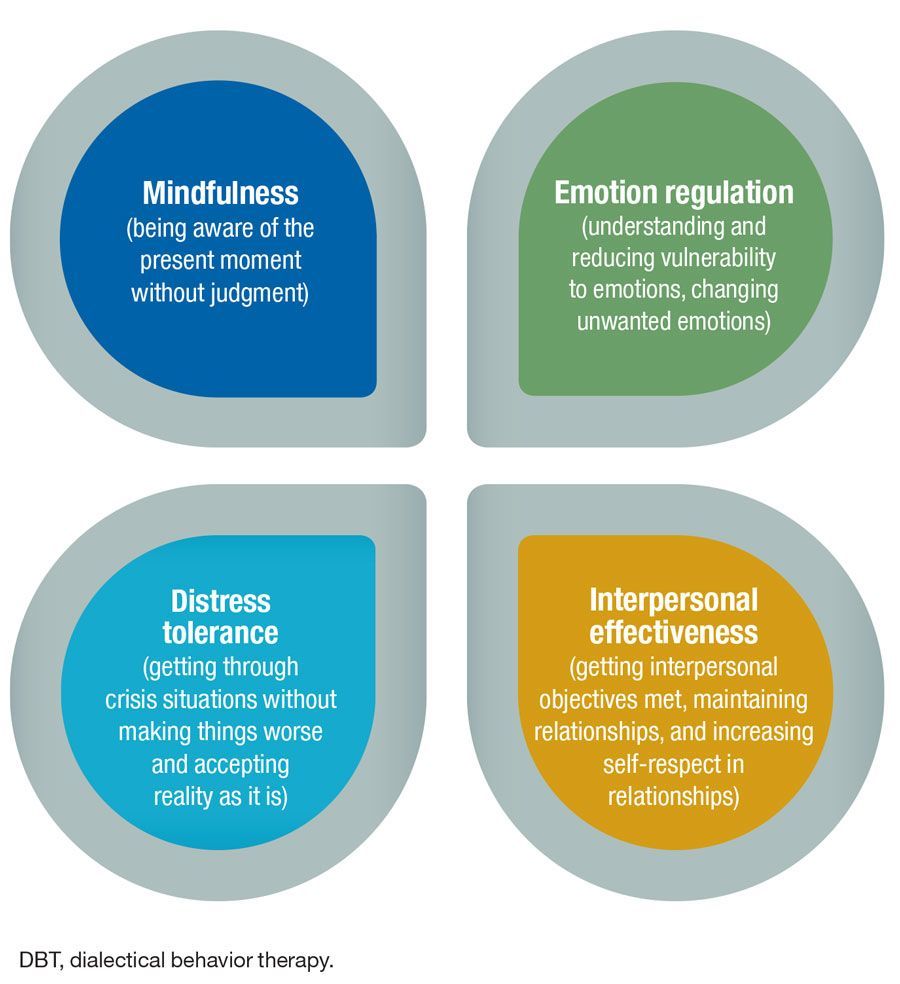
Discover what to expect from Wise-Mind DBT Brisbane’s 13-week skills group, covering mindfulness, emotion regulation, distress tolerance and relationships.